Reducing Energy and Water Consumption in Ware Washing
How Decarbonator® Outperforms
3-Compartment Sinks in Ware Washing
Imagine filling the 3-Compartment sink just once a month, adding a single dose of detergent, loading your equipment, and walking away—only to return hours later to everything spotless. That is essentially how the Decarbonator® works!
What is Warewashing?
Warewashing is the process of cleaning and sanitizing equipment using a combination of heat, water, and chemicals—ensuring thorough hygiene with the power of hot water.
Revolutionizing Warewashing:
A Comparison with Traditional
Methods
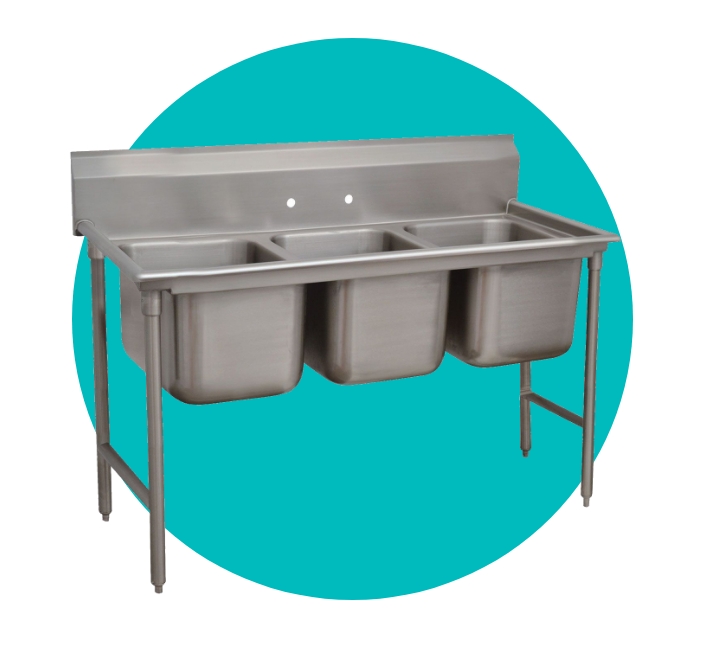
Commercial kitchens must have a 3-Compartment Sink by law, but warewashing can also be done using other methods. The sink requires manual labor to remove baked-on soils: detergent in the first sink, plain water for rinsing in the second, and sanitizer in the third.
Hand-scrubbing pots and pans is inefficient, costly, and widely disliked. The 3-Compartment Sink alone can cost around $32,000 annually, excluding chemicals
Commercial kitchens must have a 3-Compartment Sink by law, but warewashing can also be done using other methods. The sink requires manual labor to remove baked-on soils: detergent in the first sink, plain water for rinsing in the second, and sanitizer in the third.
Hand-scrubbing pots and pans is inefficient, costly, and widely disliked. The 3-Compartment Sink alone can cost around $32,000 annually, excluding chemicals
Disadvantages of
a 3-Compartment Sink
Frequent Refills and High Water Usage: Water cools and gets dirty quickly, requiring refills every 2–4 hours, using 120 gallons of hot water per refill.
Labor-Intensive and Physically Straining: Manual scrubbing takes 3–5 minutes per pot or pan and increases the risk of musculoskeletal injuries due to poor ergonomics.
Ineffective Over Time: Even with effort, pots and pans eventually become too dirty to clean, leading to costly replacements.
Compliance Challenges: Sanitizing requires strict testing of solution concentration, water temperature, and contact time to meet regulations.
Inefficient Results: Cleaning hood filters is time-consuming, with subpar outcomes despite significant effort.
Novelty Sink
Power Soakers or Continuous Motion Pot Washers function like 3-Compartment Sinks but with an agitating wash compartment. These systems lack set wash cycles and don’t require constant supervision.
Disadvantages of
a Novelty Sink
High Operating Costs: Jets water at 300 gallons per minute and often includes sink heaters to maintain hot water, significantly increasing expenses.
Ineffective Cleaning: Struggles to remove carbon buildup and only provides superficial cleaning for hood filters.
Labor-Intensive Workflow: Although items can be left in the system initially, manual handling is still required to complete the cleaning process.
Dishwashers
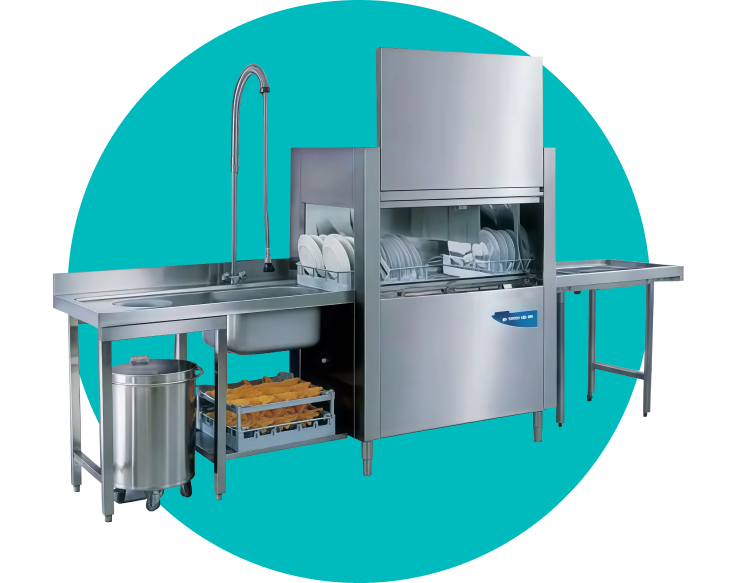
In commercial kitchens, equipment is sanitized using either automated dishwashers or cleaning by hand in a 3-Compartment Sink.
High-Temperature Dishwashers: Rely on elevated water temperatures for sanitization.
Low-Temperature Dishwashers: Use cooler water and powerful chemical sanitizers to eliminate microorganisms.
While dishmachines may seem cheaper and faster for cleaning pots and pans, they often consume more electricity and water, negating potential savings.
Disadvantages of Dishwashers
High Costs: Washing one dish rack costs about 50 cents, making dishwashers one of the priciest pieces of kitchen equipment.
Ineffective Cleaning: Dishwashers fail to remove carbon buildup and provide only superficial cleaning for hood filters.
Clean, Save and Conserve
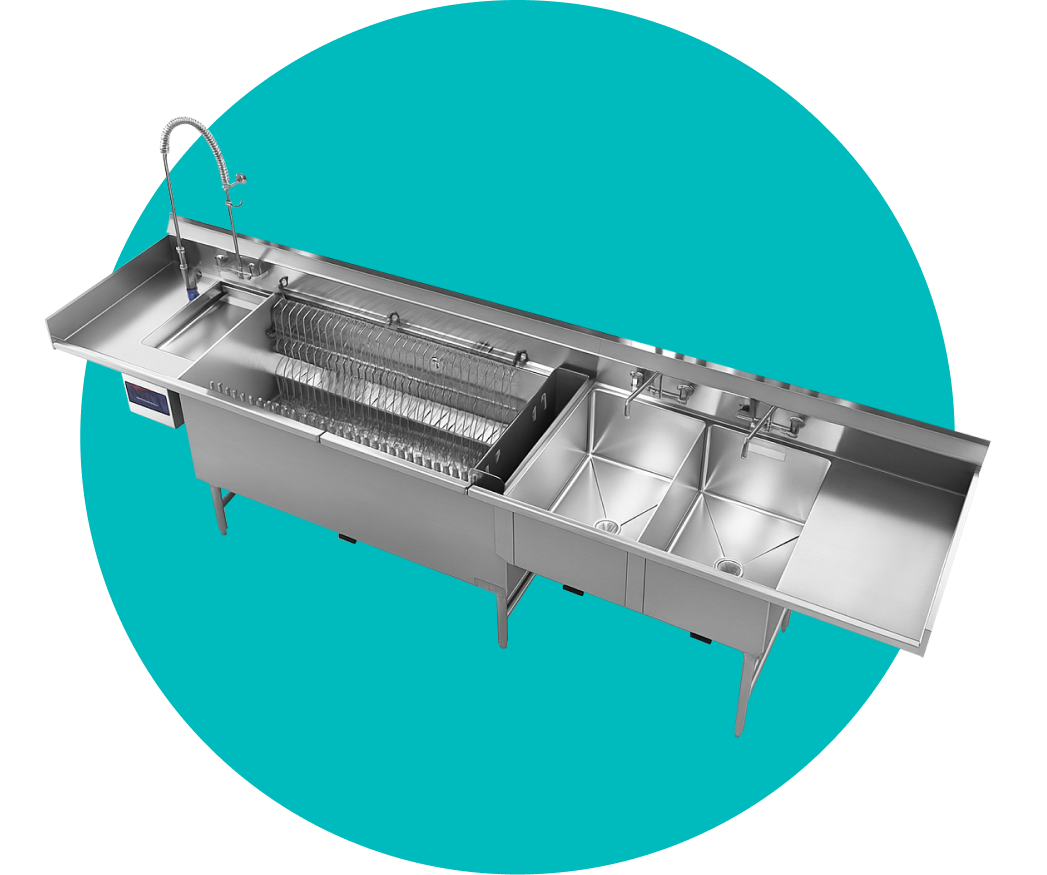
The Decarbonator® is an innovative cleaning solution to deep clean and remove carbon, grease, and grime. This superior cleaning system meticulously cleans your equipment while saving you time and money, and conserving water and energy.
Unveiling the True Costs of
Warewashing for Your Business
Rising resource costs, including electricity, water, and natural gas, significantly impact foodservice profitability. With energy prices climbing and labor costs increasing—recently by $1.40 per hour—restaurants face growing pressure on their bottom line.
The costs of these resources can have a significant impact on foodservice operations and ultimately on profitability. As indicated by the Energy Information Administration (Official Energy Statistics from the US Government), these costs have also been rising over time and more recently, there have been more dramatic increases particularly with electricity, water and natural gas.
Since the Foodservice Industry is Energy Intensive, rising energy prices continue to impact restaurant’s bottom line. In addition, the cost of labor has been rising steadily with recent increases in the Federal Minimum Rate of $1.40 per hour without benefits.
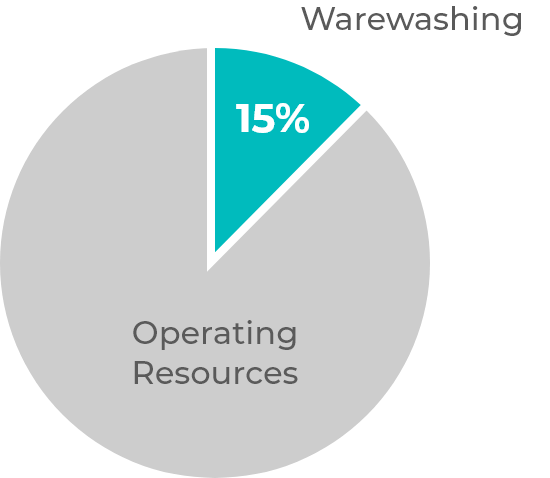
Warewashing uses approximately:
15% of any food establishments operating resources (labor and general supply costs)10
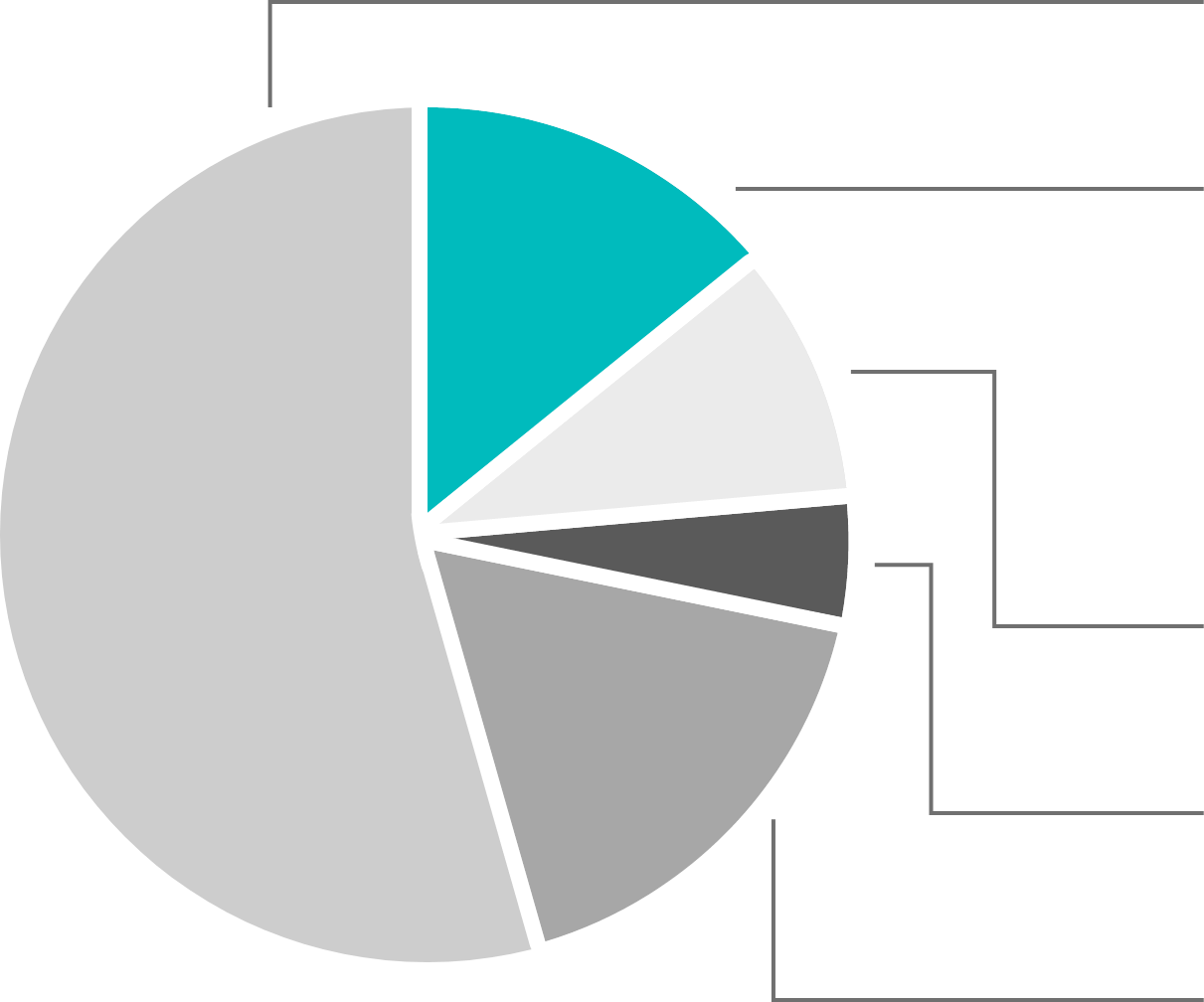
Labor $13 947: 53%
Utilities $4 737: 18%
Water 4.2%
Electrical 6.2%
Gas 7.2%
Chemical $2 368: 9%
Indirect $1 579: 6%
Wares $3 684: 14%
Figure 2:Shows the breakdown of Machine Warewashing Cost Factors by percentage with dollar figures for a $1 million F&B sales full service restaurant.
The Costs of Warewashing
Discover the hidden costs of warewashing and dishwashing, and learn how to save time, water, and money.